Five Prompts for Describing a Familiar Room
Five prompts for describing a familiar room turn a flat inventory into a focused scene, with practical ways to use viewpoint, sound, texture and light.
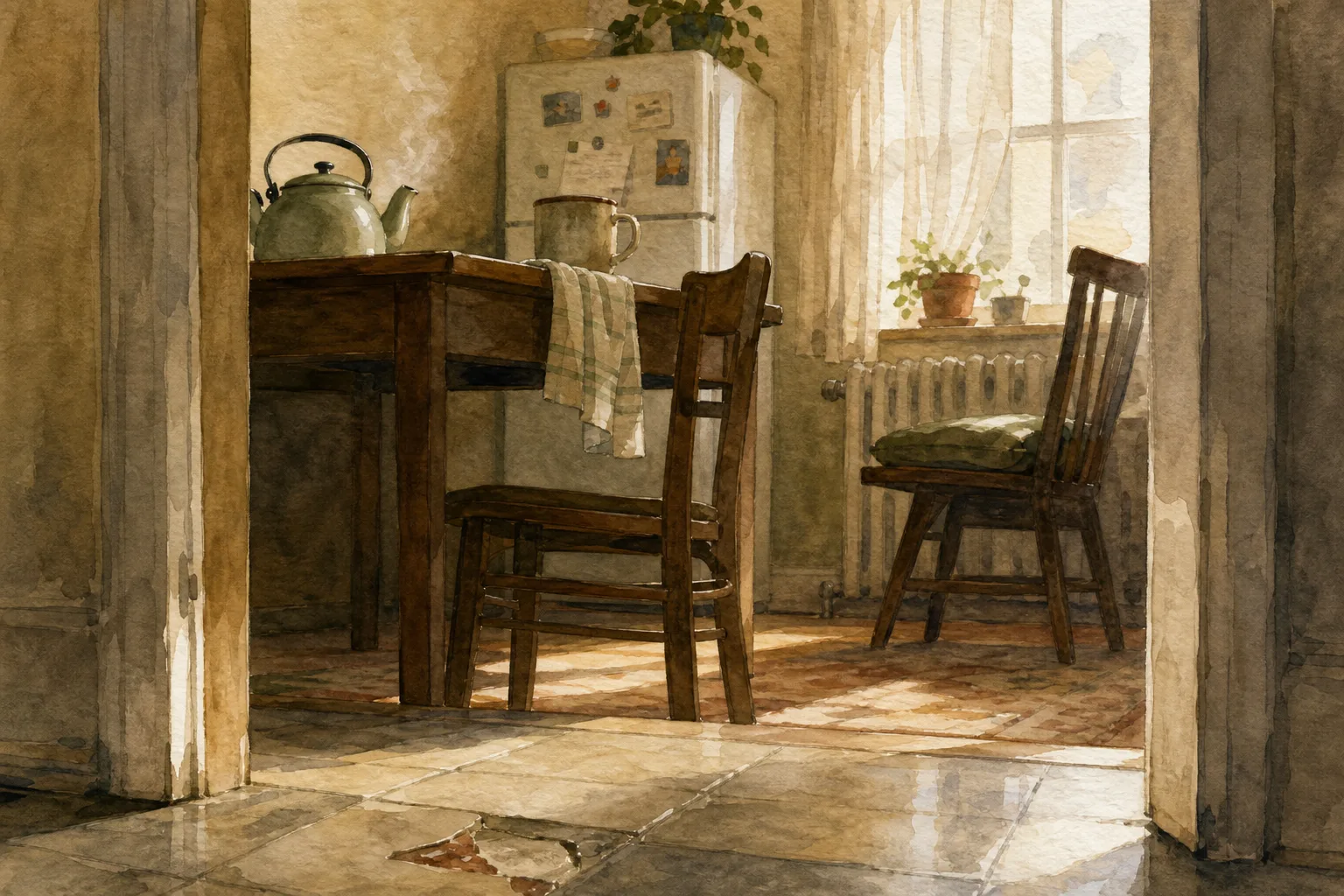
The common mistake with five prompts for describing a familiar room is trying to use all of them at once. The draft becomes an inventory with extra stops: floor, fridge, curtain. Choose one prompt instead, and the room gains a clearer shape without needing a dramatic event.
Start with the problem in the passage. If the room feels flat, change where you stand. If it is crowded with objects, listen rather than look. If the writing feels vague, focus on a surface or a small change in light.
- If the room looks like a list: check whether every object has equal weight. If so, choose one viewpoint and describe how nearby objects overlap; otherwise, keep the strongest visual relationship and remove the rest.
- If the scene feels visually crowded: check whether you can identify a useful sound. If you can, follow that sound from near to far; if not, choose one surface and describe its visible wear.
- If the draft relies on general adjectives: check whether a safe, familiar surface is available to touch. If it is, describe its texture; if not, use a visible mark such as a chip or worn patch.
- If the room feels unused: check for a trace of routine, such as a chair angled towards a kettle. If one stands out, follow it; if none does, choose a sound that suggests use without inventing who made it.
- If the scene needs a quiet progression: check for a change in light or shadow. If one is visible, follow it; if not, describe a steady reflection or a detail that remains still.
- If you are unsure whether the passage holds together: check whether its details share one viewpoint or thread. If they do, keep developing it; if they do not, remove the details that belong to a different prompt.
These prompts are alternatives, not stages. A drawer full of useful objects still needs an arrangement; so does a room description.
What does a lower viewpoint reveal?
Prompt one: Describe the room from a lower position than usual. Sit on the floor, or imagine the view from a seated visitor’s chair. Notice what moves into prominence: the underside of a table, a dark gap beneath a sofa, a radiator valve or chair legs dividing the floor.
This prompt helps when eye-level description has become automatic. You need not imitate a child or a pet. The altered position does the work: it changes which objects overlap and which details are easy to miss.
Should you write from a doorway or a corner?
Prompt two: Choose a position you do not normally use. A doorway frames the room; a corner puts nearby objects at an unfamiliar angle. From the hall, a kitchen table might look like a barrier. From beside it, you might notice scratches, crumbs and a mug ring.
Use this prompt to establish layout without naming every object. Follow one relationship: a lamp in front of a bookcase, a window caught between curtains or a coat obscuring part of a mirror.
What can sound contribute to a room description?
Prompt three: Write the room through a sequence of sounds. Begin with the nearest sound, then listen for one farther away: a chair creaking, a fridge cycling, a pipe ticking or traffic beyond the window. Distinguish what seems to belong inside from what arrives from elsewhere.
A kettle clicking off can suggest a routine without explaining who made the tea or why. Leave those questions open unless the scene needs answers. A radiator does not require a symbolic career.
How can texture make a familiar room specific?
Prompt four: Choose one surface and describe its physical qualities. It might be the varnished edge of a table, raised stitching on a cushion or cool window glass. Notice roughness, softness, temperature or a change under pressure.
“Old chair” names a category. A loose cane strand catching on a sleeve gives the reader something particular to imagine. Do not touch anything unsafe or delicate; a worn patch, chipped tile or folded cloth can be described by sight alone.
How can light give a still scene movement?
Prompt five: Follow one patch of light or shadow. Note where it begins, what it crosses and what remains outside it. If the light appears steady, follow a reflection or the outline of a lamp instead.
Keep the source plausible and the scene consistent. A bright rectangle on a table or a curtain shadow softening on the wall can give a quiet passage a modest progression. Do not turn every shift into a character’s revelation; the curtain may simply be a curtain.
What if the room is hard to remember?
How can I describe a room without seeing it?
Choose one feature you remember clearly, such as a window facing a brick wall or a particular chair. Build the passage around that feature and leave uncertain details out unless you intend to invent them.
Can these prompts work for an imaginary room?
Yes. Choose a consistent viewpoint and make the room’s materials, sounds and light sources deliberate. A specific imagined detail is more useful than a vague collection of familiar furnishings.
How many details should I include?
Include the details that support the chosen prompt. If a detail belongs to another viewpoint or thread, remove it or start a separate passage.
How can I tell whether the description is finished?
Read the passage and check whether its details belong together. When the room feels distinct through the chosen viewpoint, sound, texture or light, stop rather than adding an inventory.
How do you keep one prompt from becoming a list?
Say you have an invented draft about a kitchen, beginning at the doorway with a list of cupboards and appliances. The starting inputs are a fixed doorway viewpoint, an overfull visual inventory and no clear sense of use. First, note the table overlapping the fridge; the layout becomes easier to follow, but the passage still feels impersonal. Next, replace several appliance names with a kettle clicking off and a chair angled towards it; the scene now suggests a routine without assigning it to anyone. Finally, add a chipped tile beside the sink only if it supports that same view. The result is a narrower, more particular passage. The tradeoff is that some room details disappear; if a broad survey matters more, keep the inventory and accept a less focused scene.
For five prompts for describing a familiar room, use one clear boundary: one position, one sound, one surface or one changing patch of light. Read the passage again and remove details that cross into another approach. A room does not become more vivid merely because every object has been invited to speak.
Keep the page turning
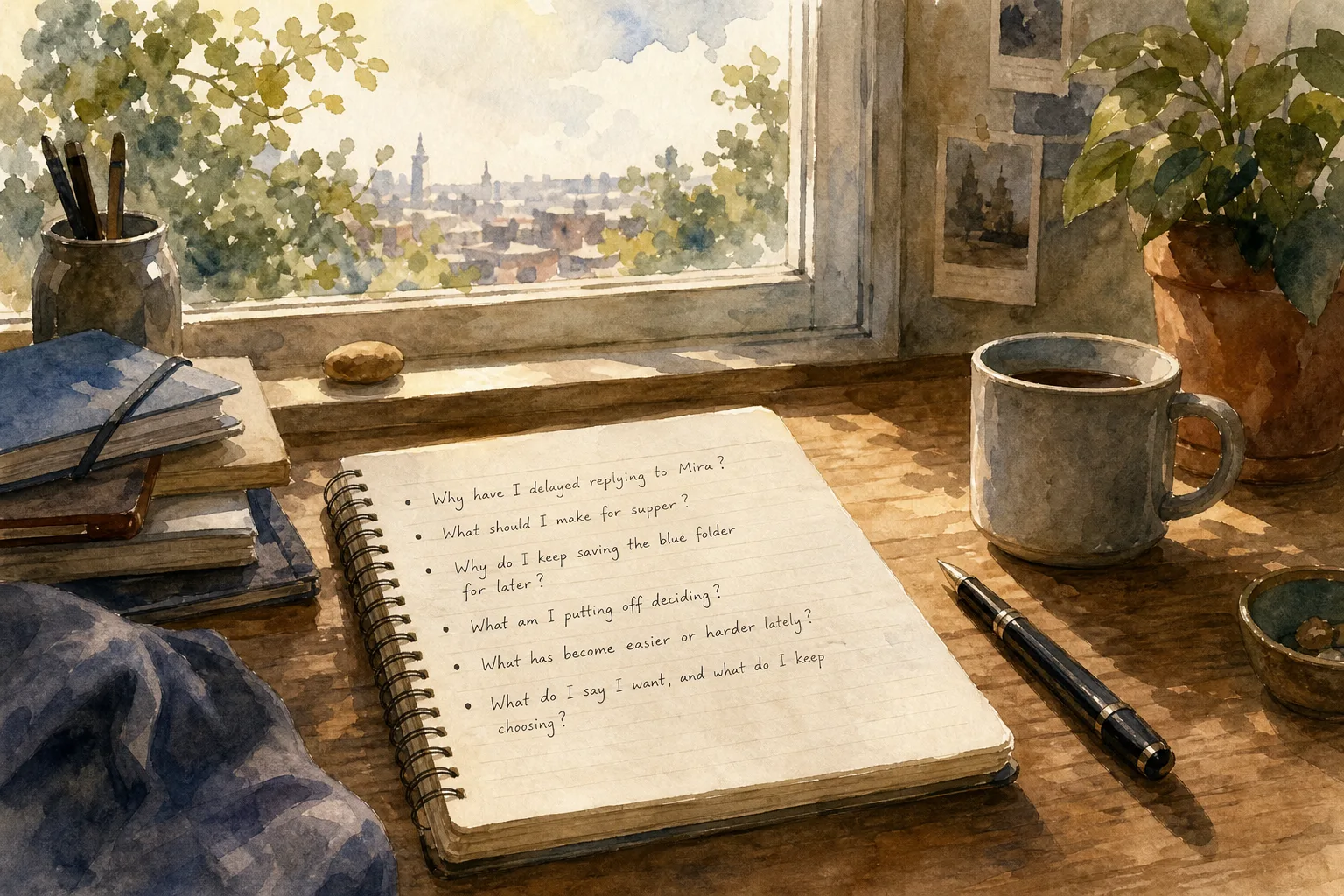
The First Line Can Be a List
A list of writing prompts can ease the pressure of a polished opening. Choose a focused…
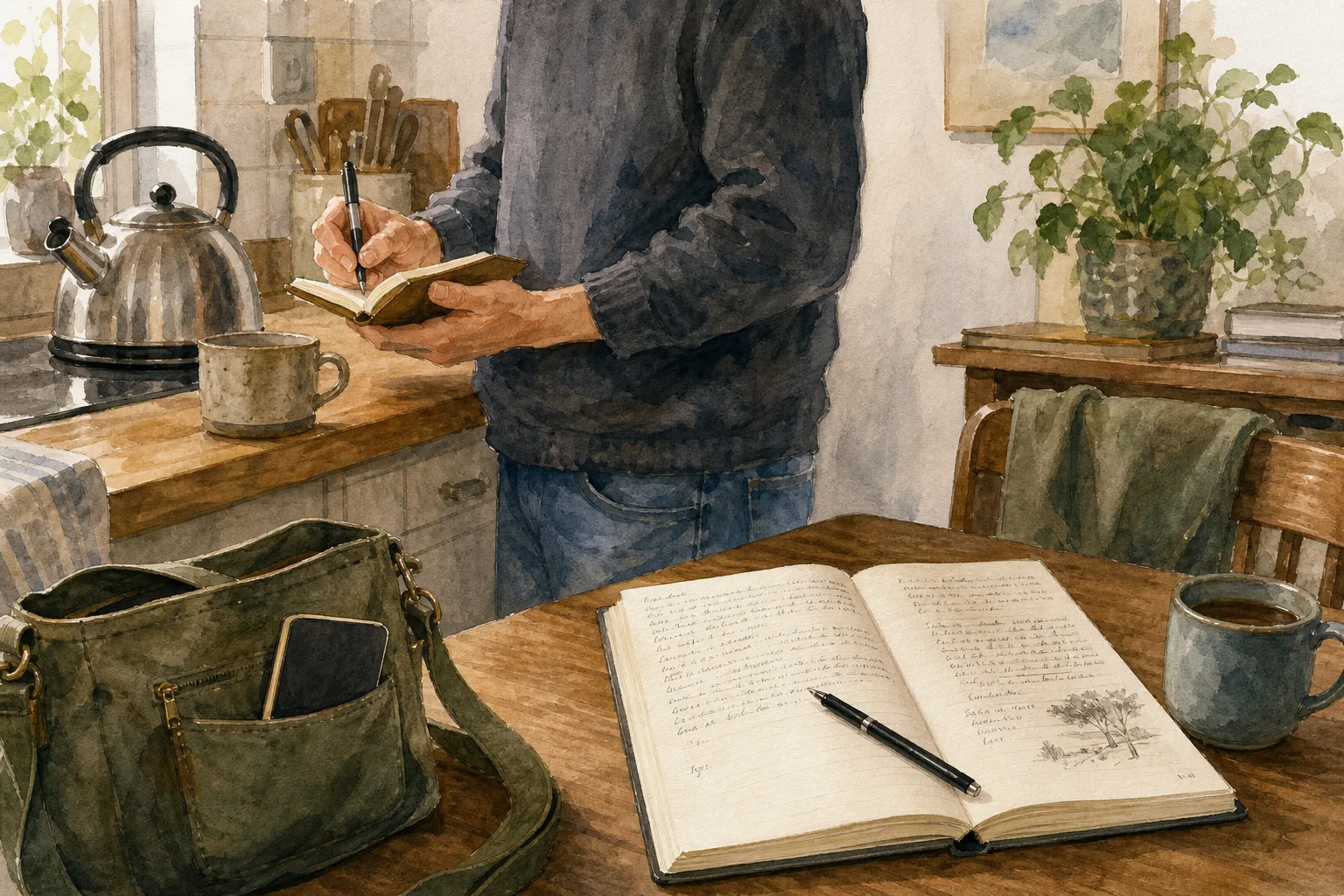
Pocket Notebook or Desk Book: Choose by Where You Write
Choose a pocket notebook or desk book by matching portability, page space and writing position to…